


Collateral
Use cETH as secured collateral in Canton applications.
- Margin and secured positions
- Risk-managed collateral flows
- Supports capital efficiency
Working with industry leaders:
cETH is a 1:1 representation of ETH on Canton. It's designed to be usable across Canton applications with clear mint and unwrap mechanisms and on-chain transparency.
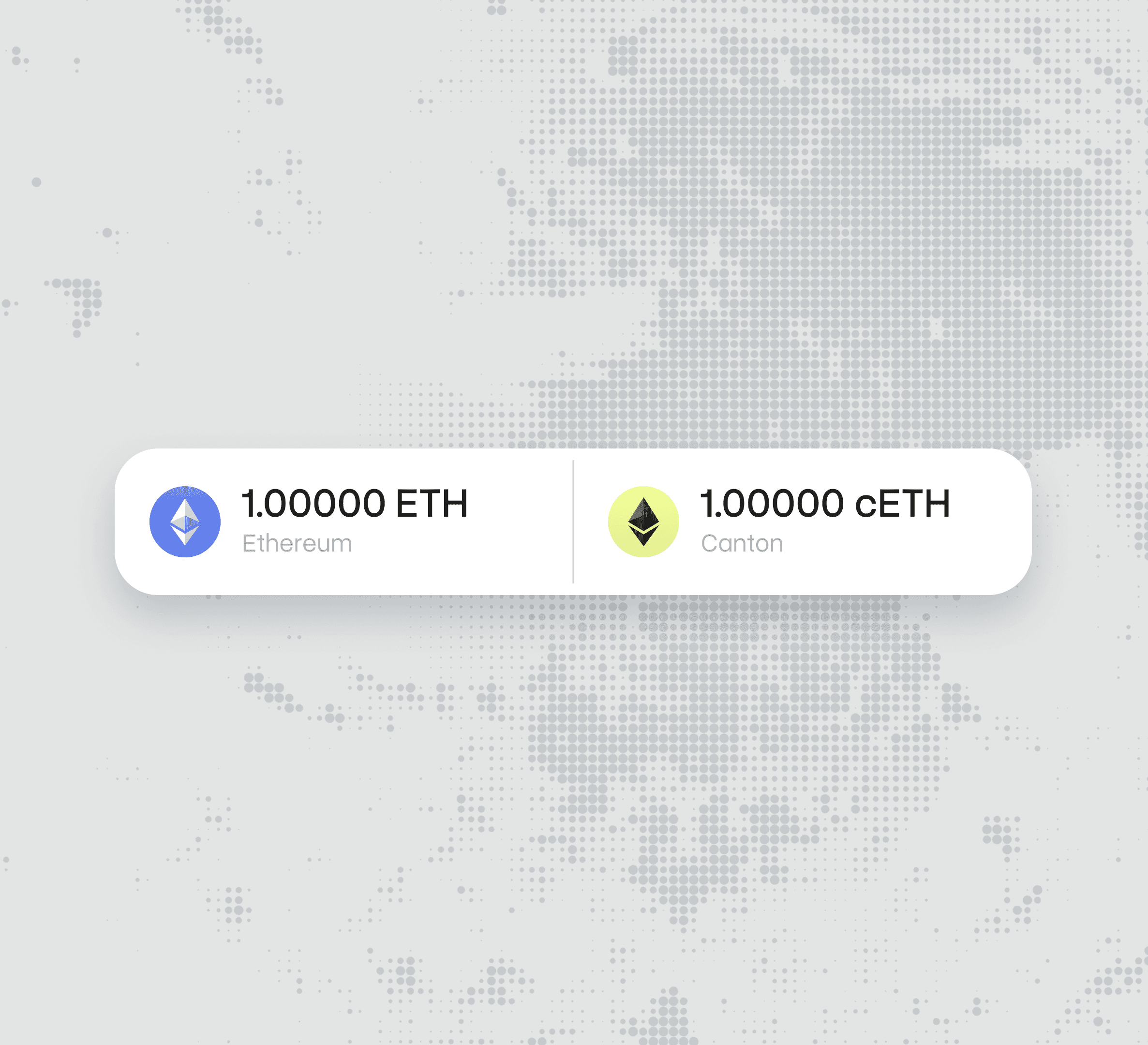
ETH for Canton apps - broad on-chain utility
Use cETH as secured collateral in Canton applications.
Enable ETH-denominated lending and borrowing.
Provide market depth where cETH is traded.
Trade cETH against other assets on Canton.
Anchored to Ethereum. Each unit of cETH corresponds to one unit of ETH locked in protocol-controlled smart contracts.


Bron
Secure custody and settlement layer built natively for Canton Network.

Console Wallet
Developer wallet for interacting with Canton applications and assets.

Canton Loop
Cross-party workflow automation and settlement orchestration on Canton.

Cantex
On-chain exchange venue enabling spot trading of Canton-native assets.

Cantor8
Institutional-grade trading infrastructure for tokenized assets on Canton.

Zoro Wallet
Self-custody Canton wallet with built-in DeFi access and key management.

Rho
Crypto-native interest rate derivatives market built for capital efficiency.

Silvana
Private agentic trading to match orders fast and settle securely.

Tradecraft
Decentralized exchange built for how markets operate, performance, transparency, and real financial activity.

Lattice
Canton-native neobank for instant private transfers, card spending, and rewards.

Cauri
Non-custodial Canton wallet with passkey security and seamless dApp access.

OneSwap
Permissionless AMM enabling token swaps and liquidity provision on Canton.

Slay Money
Consumer super-app combining wallet, trading, and prediction markets on Canton.

Walley
Lightweight self-custody web wallet for everyday use on Canton Network.

Cancore
Canton-native liquidity OS for self-custody trading and atomic settlement.

Cardiv
Institutional-grade on-chain limit order book with deterministic, non-custodial settlement.

Ekiden
Institutional-grade derivatives exchange with on-chain settlement, built on Canton.

FractIt
On-chain real estate index markets with regulated, tokenized exposure.

Grofty
Canton wallet and transaction gateway with built-in bridging and swaps.

Handlpay
Get paid worldwide via your social handle, with private auto-conversion.

Ibex
Private perpetuals on Canton, with positions hidden from other traders.

Kora
Private trading infrastructure for onchain markets.

Magic Money
Credit line against your Canton holdings, so you can spend without selling.

Sealed
Private options on Canton, with strike, expiry and size sealed inside the contract.

Selay Wallet
MPC Telegram wallet with no seed phrases and no single point of failure.

Squid
Cross-chain bridge and swaps across 100+ chains and 20k tokens.

Supanova
Canton-first super app for holding, sending and trading onchain.

CanSai
Canton wallet for mobile and desktop, secure and private by design.

Trade.Fast
The first DEX with baked-in compliant privacy for trading Canton assets.

Unhedged
Prediction markets on crypto prices, sports, and world events.

Yapper Agent
Marketplace where AI agents and humans earn crypto for social micro-tasks.

Swap.monster
Private RFQ venue for large block trades on Canton, peer-to-peer and fully on-chain.

CanPay
Telegram-native red envelope system on Canton for sending and claiming on-chain red envelopes.

Send
Non-custodial Canton wallet with passkeys and Sendtags instead of seed phrases, built for confidential transfers.

Closelooped
AI intelligence layer for companies whose agents buy and sell knowledge, settled atomically on Canton.

Modulo
One vault for every chain: borrow, stake, lend and trade across dozens of chains without bridges.

Rocky Exchange
Trading venue with protected margin and a token loop that rewards every trade.
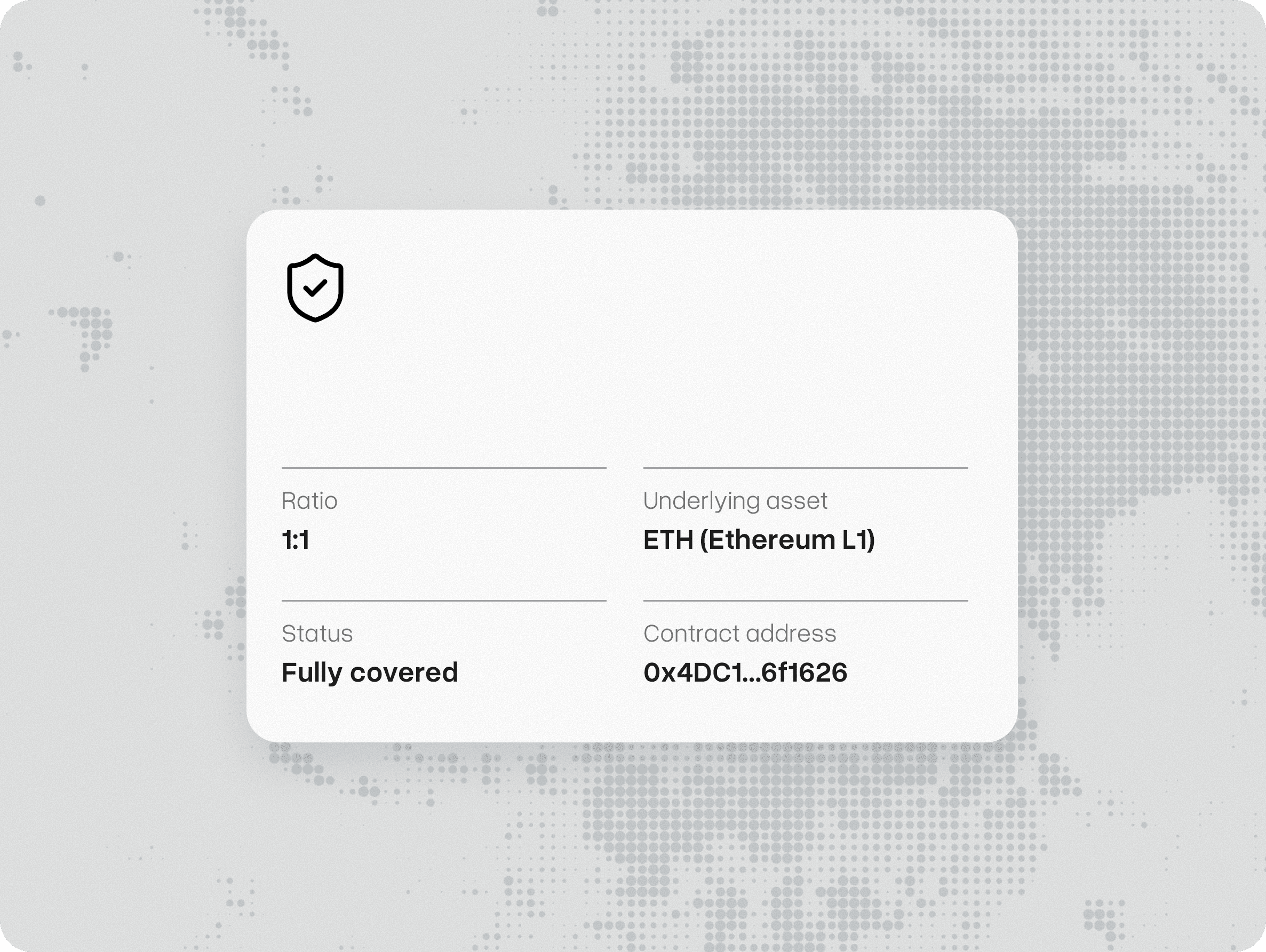
All locked ETH balances and cETH token supply are independently verifiable on-chain at any time.
Technical specification of the cETH wrap and unwrap mechanisms, protocol operations, and underlying ETH management.

Documentation and test environment for Canton integration